Private Harry Jupp, Glascote Heath, 1884-1940
One brother lost his life, the other lost the life he knew.

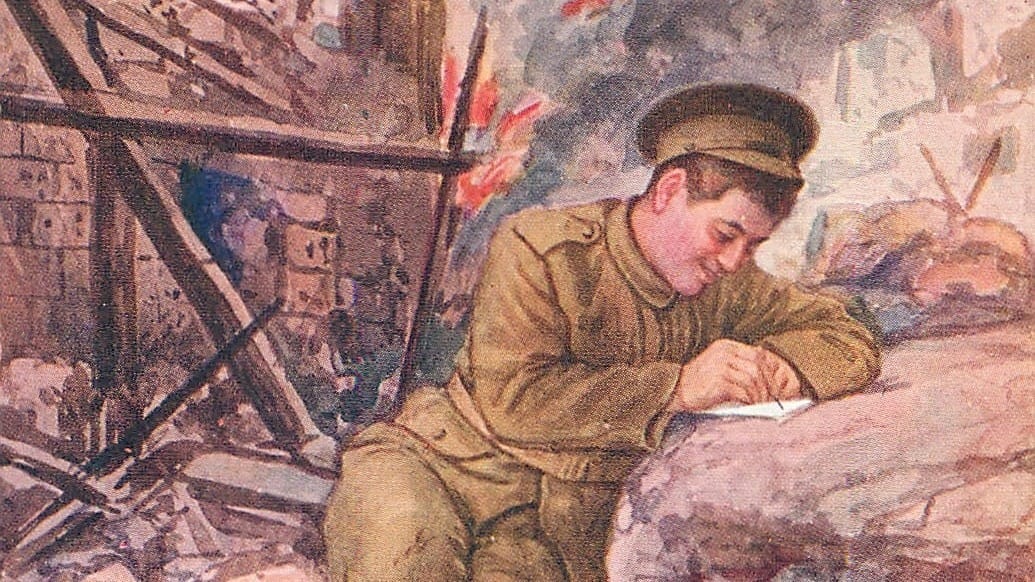
You can watch the video on YouTube or read the full story below:
Harry Jupp was born on 9th September 1884, in Woodingdean, near Brighton, in Sussex. He was the eldest child of George and Mary Jupp. By 1901 the family had moved to Surrey, and he was living with his family at 13 Cecil Road, Reigate. Harry and his father George were carters.
Harry joined the 2nd Royal Warwickshire Regiment aged 17 years, 7 months, 0n 28th April 1902. His regimental number was 8619. When he joined the Regiment they were stationed in Devonport. In 1904 they moved to Portland, in 1906 they moved to Bordon Camp in Hampshire, then in 1909 they moved to Whittington Barracks, between Tamworth and Lichfield in Staffordshire.
Harry reached 7 years of full-time service in April 1909, and he was entitled to spend the next 5 years in the Army Reserve, but he was still at Whittington Barracks at the end of the year, serving with the rank of Drummer. At midnight, one night in December, he was riding a bicycle at speed through Glascote, when he accidentally knocked down a policeman. Police Sergeant Saunders was badly injured. He had broken his ribs and was off work for a month. Harry was sent to court, but he claimed that his brakes had failed, and the case was dismissed.
Perhaps it was meeting a young lady which encouraged him to leave the Army. He was transferred to the Reserve, and on 26th December 1910, he got married at St Editha's Church in Tamworth. His new wife, Bina Ann Broadhurst, was six years his junior.
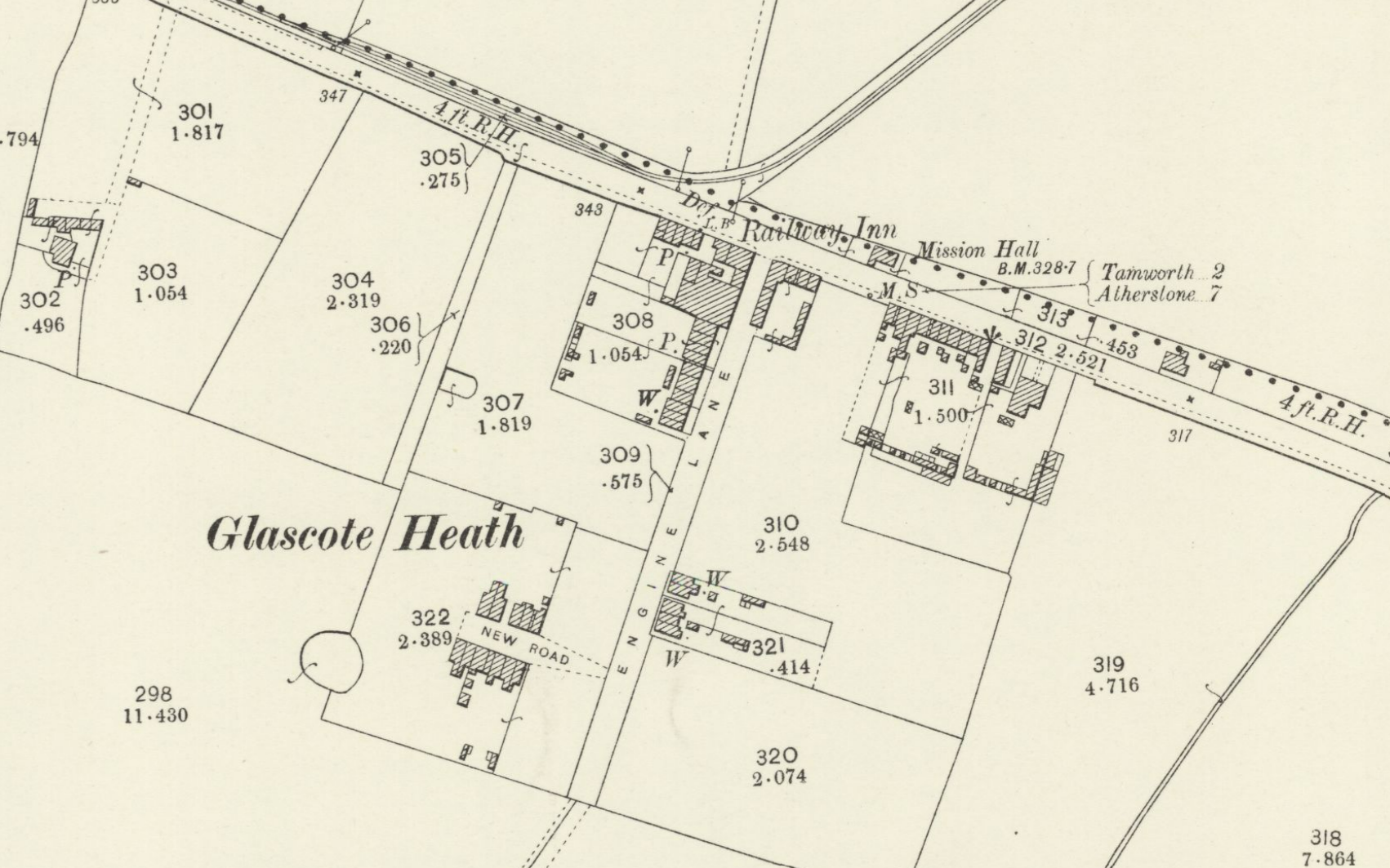
In 1911 Harry and Bina were living at 10 Engine Lane, Glascote Heath. 10 Engine Lane no longer exists. It was near the junction of the old Glascote Road, now Beyer Close. Today there are only five Victorian houses left in Engine Lane. Sadly number 10 was demolished to make way for new development. New Road on the map below later became Brain Street. Harry was working as a road repairer in the mines, an important and dangerous job, ensuring that all the underground passages were level and secure.
Harry's war
War broke out in August 1914, and Harry was called up from the Reserve. The evidence shows that he and his brother William, who were both in the 2nd Warwickshire Regiment, were sent out to France together, and arrived on 4th October 1914. Harry had just turned 30 years old. Unfortunately, neither of their service records have survived, but we know a great deal about what happened seventeen days later, on 21st October 1914. The War Diary reads:
Zonnebeke 21st Oct 1914: Enemy attacked our trenches at daybreak. 1st day of the Battle of Zonnebeke (Ypres). 1st experience of German high explosive shell (Black Marias). A great many casualties. Retired at 1.00am to Railway Crossing SW of Zonnebeke.
Harry and William were two of the many wounded. I found several references to their experiences in the newspapers, some of which was written in Harry's own words. Ten days after the attack, the Tamworth Herald reported:
GLASCOTE HEATH MAN WOUNDED. Private H Jupp, A Company, 2nd Royal Warwickshire Regiment, senior assistant Scout Master of the Kettlebrook and Glascote troop of Boy Scouts, writing to Mr Locke, Scout Master, Kettlebrook, on Sunday, states that he is in a hospital at Boulogne. He has been slightly wounded in the thigh by a bayonet. He hopes to be well again in the course of two or three weeks, and to return to the firing line. His brother [William Jupp] is in the next bed to him, having been wounded with shrapnel on the same day, October 21. Private H Jupp says:
We had a hard fight the day I got my lot, killed hundreds of Germans; they were piling their dead in front of them for head cover. There were only about 100 yards between us and the Germans for three or four hours, but they came in such large numbers we were forced to retire. They did not pass the order along our trench, and about a company of us did not retire with the remainder; the Germans saw that, so they charged our trench and this bounder caught me climbing out at the back of the trench. When I got on my feet, I nearly blew his head off, but of course I had to run for it. I did not trouble about my leg. They were pinging all the time over my head. The Germans fire from their hip, and the bullets go high. The rifle fire is no good at all, but they are good with the guns and maxims.
After a spell in the hospital in Boulogne, Harry was sent back to England, and eventually he was transferred to a convalescent home in the Isle of Wight. I have found no evidence that Harry was ever promoted to Corporal, as was stated by the Surrey Mirror in November 1914, and without his full service records, I cannot be sure whether he ever returned to the front.
Harry's brother, Sergeant William Jupp, did go back to the front, but a year later, almost to the day, he was wounded in action. On 25th September 1915, he died from his wounds, at the 22nd Field Ambulance in France, age 26, and he now lies buried in Fouquieres-les-Bethune Churchyard Extension.
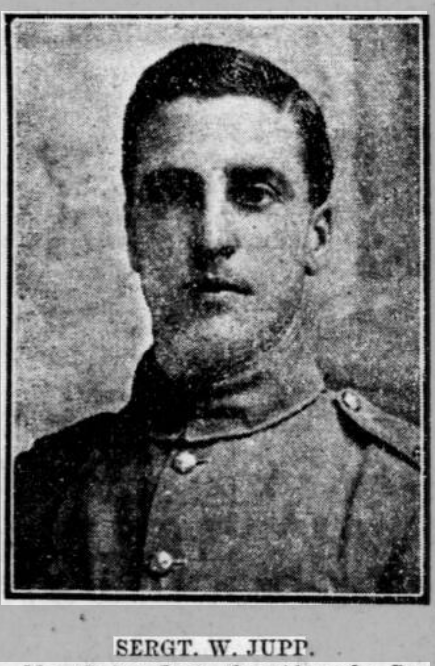
On 19 November 1915, the Surrey Mirror reported:
REDHILL BROTHERS FIGHTING SHOULDER TO SHOULDER: Mrs George Jupp, the widow of a Corporation employee, who lives at 87 Cromwell Road, has lost one of three sons who were serving with the colours. She has received official information that her second son, Sergeant William Jupp, 2nd Battalion of the Royal Warwickshire Regiment, died from gunshot wounds received in action on September 25th, and is buried at Bethune. Her eldest son, Corporal Harry Jupp, also of the 2nd Battalion Royal Warwickshires, is recuperating at a convalescent home in the Isle of Wight, and the youngest son, Private Frederick Jupp, is in France serving with the 8th Battalion, the Queen's Royal West Surrey Regiment. [William] Jupp went with his regiment to France on the outbreak of the war and was found later by his brother Harry, who was called up as a reservist. They were fighting shoulder to shoulder at Ypres in the spring, when Harry was badly wounded by a bayonet. The sergeant went to his assistance and carried him out of the danger zone, being wounded himself in the head by shrapnel. Sergeant [William] Jupp soon recovered from his wounds, and his brother was sent to England. On the 25th September, Sergeant Jupp was leading a platoon in the great advance, when he was shot in the abdomen, and died later in the day. The last letter Mrs Jupp received from her son was dated September 18th, when he stated he was in the best of health and had completely recovered from his wounds.
It sounds as if a few details have been embellished in this article, but I think we can trust that Harry was still "recuperating" in the Isle of Wight in November 1915, more than a year after he was wounded. I wonder whether there are hospital records in the Isle of Wight to find out more about his admittance, medical records, and discharge?
Harry's discharge
Harry was discharged in 1918, either on 2nd February or 2nd November (I have found records for both). He was discharged due to either illness or disease, no longer fit for service. He was awarded the British War Medal, the Victory Medal, and the 1914 Star. He was also awarded the Silver War Badge, which was posted to him in May 1919. This was an official award issued to members of the armed forces discharged due to wounds or sickness during the War. Its primary purpose was to prove that a discharged person had served their country, and it was intended protect them from being accused of cowardice.
Post war life
Harry found work as a bus conductor - coincidentally the same as my grandfather when he returned from war. His son, Maurice/Morris William Jupp, was born in November 1918. In 1921, his family were living at 8 Dordon Road, Polesworth, with his in-laws, the Broadhursts. He may have had other children, but the only hint of this comes from a 1928 Nuneaton Chronicle article, and then he died, no children attended his funeral.
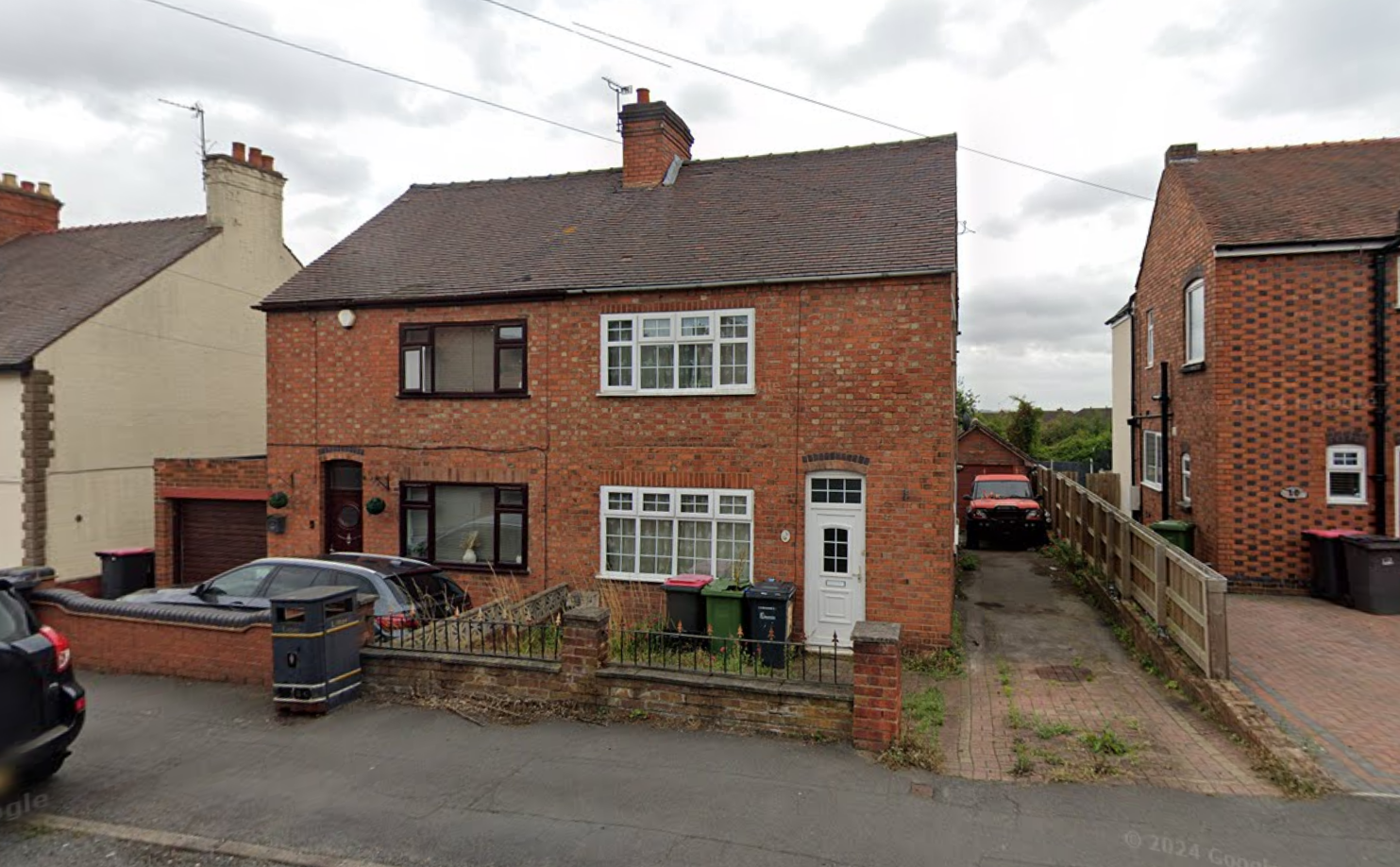
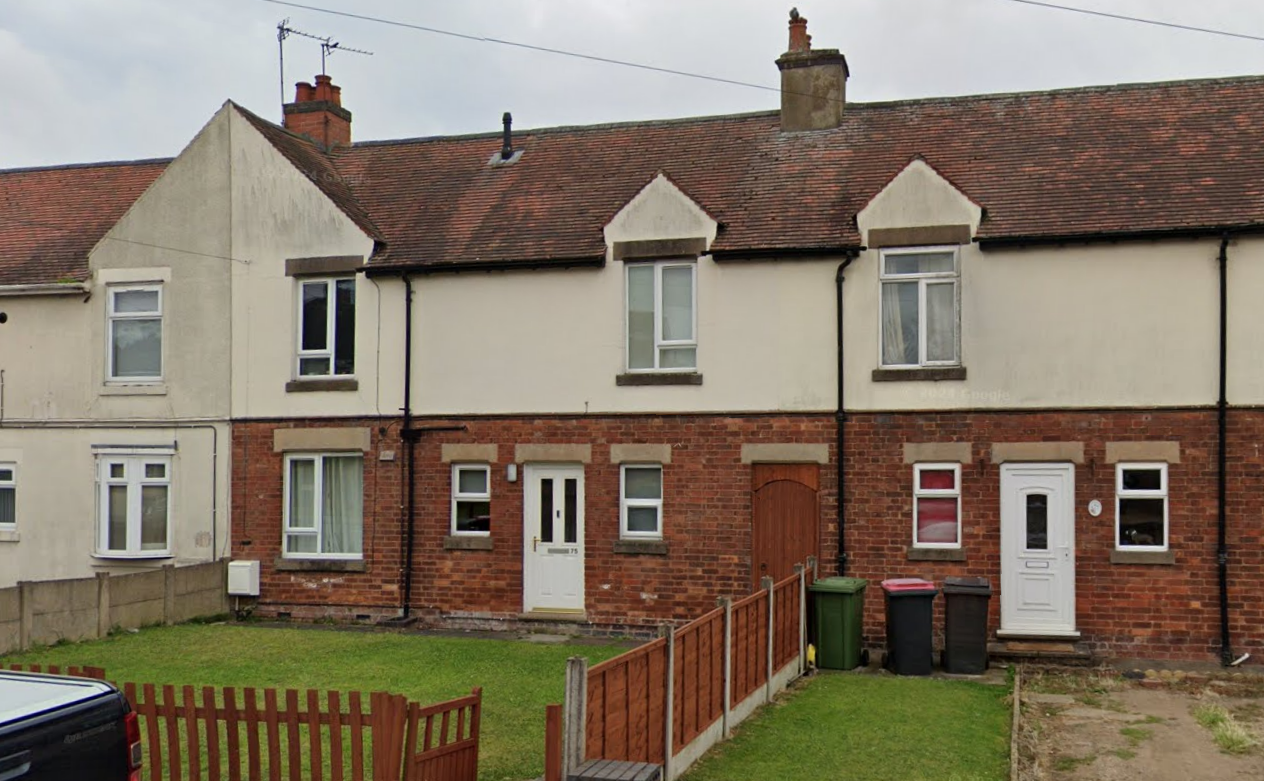
Some time between 1921 and 1926, the little family moved to 75 Whitehouse Road, Dordon, which was built in about 1921.
Dog trouble
On 3 April 1926 the Tamworth Herald reported a serious altercation:
Dordon Assault Case. Bina Jupp, married, of Whitehouse Road, Dordon, was summoned for having assaulted Lizzie Gill, Whitehouse Road, on March 15. Complainant stated that the defendant's dog went to her pantry and took a joint of meat. She went round see the defendant, who got into a temper, and caught hold of her by the neck, tore her clothes, scratched her face, pulled her hair, and pushed her about. Ida Wallbank, sister of the complainant, corroborated. PC Penney spoke to the woman's distressed state. Defendant alleged that the complainant told her she was like the dog—a nuisance. Complainant refused to go away, and she merely pushed her from the door. Mrs Gill, she added, smacked her in the face. Defendant was bound over keep the peace for six months and ordered to pay the costs, 6s.6d.
The death of Harry's son
Tragically on 1st January 1927, Harry and Bina's son Morris died. He was eight years old. On 14 January 1927, the Atherstone News and Herald reported:
BOY'S FATAL FALL, Slipped on the Footpath at Dordon: The circumstances attending the death of Morris William Jupp, aged 8 years, of Whitehouse Road, Dordon, who met with an accident on December 14th, were investigated at an inquest held at Tamworth. The evidence showed that on December 14th, deceased fell on his left arm, whilst sliding on the footpath. Four days later he complained to his mother that his arm was painful, and his mother treated him for a sprained elbow. Dr Cowie, of Polesworth, was called in the next day, and ordered the boy's removal to the Tamworth Hospital, where he died last Saturday morning. The cause of death was osteomyelitis of the left arm [an infection in the bone], and a verdict of "Accidental death" was returned.
I have not yet found his burial place.
Dog trouble part 2
Two years after the first incident, the Jupps' dog caused trouble again. Was it the same dog as before? Perhaps it was. According to the Midland Counties Tribune the dog was a collie. Harry was ordered to appear at the Atherstone Petty Sessions, and on 17 August 1928 the Nuneaton Chronicle reported on the case:
Dog's Death Sentence: Harry Jupp, 75 Whitehouse Road, Dordon, summoned for being the owner of a dangerous dog at large at Polesworth on August 2nd. Defendant pleaded not guilty. Mrs Dorothy Murden, 77 Whitehouse Road, Dordon, said she was in her entry when she heard the dog snap. Witness found the dog had bitten her eighteen-month-old child in the elbow. There were three teeth marks in the elbow. The dog had bitten all the children in turn. P C Taylor said the child's elbow was swollen and defendant said he had never known the dog to do a thing like that before. William Blower, The Lynch, Polesworth, said the same dog had bitten him twice and it was not fit to be at large. Defendant said no one had complained to him of the dog. He had children of his own and the dog was always quiet. The Bench made an order for the dog to be destroyed and defendant was also ordered to pay costs, 19s.
The Tamworth Herald added that the dog had bitten William Blower on one occasion and attacked him on another, and that P C Taylor had received several additional complaints since the incident under investigation.
Remember that name! We will hear about William Blower again.
Separation
Sometime between 1928 and 1932 Bina moved to Vam-Var, Dordon Road, Dordon. On 4 November 1932 the Midland Counties Tribune reported:
Harry Jupp, Oak Cottages, Ravenstone, Coalville, a bus conductor, was summoned by his wife Bina Jupp, Vam-Var, Dordon Road, Dordon, for desertion, on October 21st, and she applied for a maintenance order. Mr Rutherford, of Tamworth, for defendant, stated that an agreement had been reached that an order for £1 a week should be given. The Bench agreed to this.
In 1939, Bina was still married to Harry but they were living apart. Bina was living at 2 Brain Street, Glascote Heath, with none other than William Blower, he who had been a witness against Harry in the dog case eleven years earlier. He was now a widower, a retired miner, and 61 years of age, about 12 years older than Bina. In the 1939 census Bina declared herself to be his housekeeper. Was there something going on? Or was it really a business relationship? But regardless, within three years she had moved on. She married John Walters in the Atherstone district in 1942, and then married again in 1967, to Joseph E Goodwin, when she was about 77 years old! Joseph died in 1974 and Bina died in 1981, aged 90.
Harry's death
In the meantime, Harry had moved into his sister Georgina's home at Mostyn Terrace, Redhill, Surrey. In 1939, he was 56 years old and incapacitated through illness. He died on 20th April 1940 and was buried in Redstone Cemetery, after a service held in the cemetery chapel. The mourners were his mother, his sister Mrs Gibson and her husband, his brother Frederick and his wife, his sister Georgina Charlwood, Georgina's husband Harry, and their daughters Jean and Joan. I have added Harry to Find a Grave and marked him as a Veteran.